

Mount Peace and the Underground Railroad Legacy of Freedom Seekers, Botanicals and Black Heroes

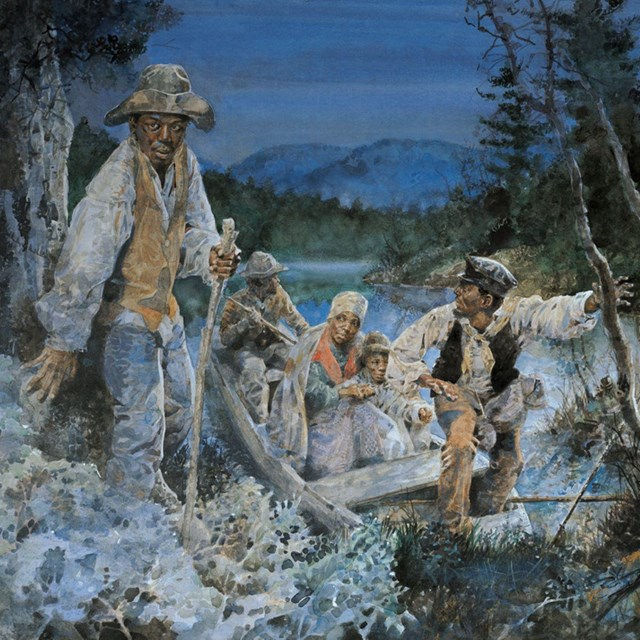
Freedom did not move through American history as an idea alone. It moved on tired feet, over frozen ground, through pine barrens and river crossings, past fields, churches, kitchens, cemeteries, and safe houses where people chose courage over silence.
Mount Peace Cemetery carries that memory in the land itself. Located in Lawnside, New Jersey, one of the state’s historic Black communities, Mount Peace is more than a burial ground. It is a place where abolitionists, freedom seekers, safe house operators, and Black Civil War veterans rest together, reminding us that the struggle against slavery was fought in many ways.
Some escaped bondage. Some hid others. Some enlisted in the Union Army. Some carried food, directions, warnings, prayers, and plant knowledge. Their work forms the heart of Mount Peace and the Underground Railroad Legacy of Freedom Seekers, Botanicals and Black Heroes.

September is a month of escape, memory, and recognition
September has special meaning in Underground Railroad history. Maryland and Michigan have issued proclamations recognizing September as International Underground Railroad Month, encouraging the public to visit historic sites, study freedom stories, and reflect on the courage of those who escaped slavery and those who helped them.
The month carries significance because two of the most famous self-liberation stories in American history took place in September.
Frederick Douglass escaped slavery on September 3, 1838. Disguised as a sailor and carrying borrowed documents, he traveled by train and steamboat from Baltimore toward freedom. His escape was dangerous and carefully planned. After reaching the North, Douglass became one of the most powerful abolitionist voices in the world. His speeches, writings, and organizing exposed the violence of slavery and demanded full equality.
Harriet Tubman escaped from Maryland in September 1849. Her self-liberation was only the beginning. She returned to the South again and again to guide family members and others to freedom. Tubman became one of the Underground Railroad’s most fearless conductors, and during the Civil War she also served the Union as a scout, nurse, and spy.
Their stories are famous for good reason, but September should also draw attention to lesser-known freedom seekers and local networks. Douglass and Tubman did not emerge from nowhere. They were part of a wider Black freedom tradition that included mariners, ministers, farmers, washerwomen, teachers, soldiers, children, elders, and entire communities.
Mount Peace belongs in that larger September remembrance. It gives visitors a place to connect national history with local lives.

Mount Peace stands where memory, resistance, and land meet
Mount Peace Cemetery is significant because it holds stories that are often left out of the national record. Cemeteries can look quiet, but they are full of evidence. Names carved into stone point to families, service, faith, migration, labor, loss, and resistance.
At Mount Peace, that evidence connects directly to the Underground Railroad and the broader Black freedom struggle. The cemetery is recognized through several important designations:
Each designation highlights a different part of the same story.
The National Underground Railroad Network to Freedom connects Mount Peace to a wider map of places tied to self-emancipation and anti-slavery action. The NJ Black Heritage Trail places it within the long arc of Black life, community building, and resistance in New Jersey. The African American Civil Rights Network links the site to the ongoing fight for citizenship and justice. The Black Cemetery Network recognizes the urgent need to preserve Black burial grounds, many of which have been neglected, threatened, or erased.
The Level I Arboretum designation adds another layer. It asks visitors to notice the living landscape as well as the graves. Trees and plants at Mount Peace are not just scenery. They help tell the story of survival, care, ecology, and memory.
Freedom seekers did not wait for freedom to be granted
The Underground Railroad was not a single route, tunnel, or organization. It was a changing network of people, places, signals, and decisions. Its power came from ordinary people taking extraordinary risks.
Freedom seekers were at the center of it. They were not passive passengers being carried to liberty. They studied roads, waterways, stars, seasons, patrol patterns, and rumors. They listened for safe names and watched for danger. They made impossible choices with incomplete information.
Escaping slavery meant leaving behind loved ones, facing violence if captured, and entering a country where racist laws and kidnappers could follow. The Fugitive Slave Acts made danger national. Even in free states, Black people could be seized and forced south.

The Importance of Safe Houses in Historical Context
Why safe houses mattered? A safe house could be a cellar, barn, church, attic, back room, or kitchen. It could offer a few hours of sleep, a meal, a change of clothing, a whispered route, or a hiding place until nightfall. The people who operated these spaces turned their homes into front lines.
Women played a major role in this work. Across the country, Black women and white women sympathetic to abolition opened doors, prepared food, washed clothing, watched roads, passed messages, and sheltered families. Some acted through churches and mutual aid networks. Others worked quietly, known mainly through local memory and community histories.
Mount Peace Cemetery helps honor women connected to this legacy, including women who operated safe houses and now rest there. Their work was domestic only in appearance. In reality, every meal prepared for a freedom seeker, every door opened at night, and every warning passed along challenged the power of slavery.

Alexander H. Newton and Black veterans carried the fight into uniform
The struggle against slavery also moved onto battlefields. Black Civil War veterans buried at Mount Peace represent a crucial chapter in American history: the moment when Black men fought not only for the Union, but for the destruction of slavery and the future of citizenship.
Among the notable figures associated with Mount Peace is Alexander H. Newton, remembered as part of this lineage of Black service and sacrifice he was Commissary Sergeant for the 29th Connecticut Colored Infantry Regiment. Black Civil War veterans like Newton stood at the crossroads of two fights. One was military. The other was moral and political.
Their service challenged the lie that Black people had no claim to citizenship. It also helped force the nation to confront slavery as the core cause of the war. By serving, Black soldiers made freedom harder for the country to ignore.
Additionally, the United States Colored Troops and other Black military units faced unequal pay, harsh conditions, and the threat of brutal treatment if captured. Still, they enlisted in large numbers. Some had been born free. Others had escaped slavery. Some fought knowing their families remained vulnerable.
Their military service did not end racism. After the war, Black veterans still faced discrimination, violence, and political betrayal. Yet their service left a permanent mark. They helped win the war that ended legal slavery in the United States. They also laid claims to voting rights, education, land, dignity, and public memory.
At Mount Peace, their graves ask visitors to see Black veterans as freedom fighters in the fullest sense. Their uniforms were one expression of a much larger battle.

Afro-botanical knowledge helped people survive the journey
The Underground Railroad is often remembered through houses, wagons, lanterns, songs, and northbound roads. The natural world deserves a place in that memory too.
Afro-botanical knowledge refers to the ways people of African descent understood, used, carried, adapted, and shared plant knowledge. Along routes to freedom, this knowledge could matter deeply. It connected African traditions, Indigenous knowledge, Black Southern experience, and local observation.
For freedom seekers, plants could serve practical needs:
Food when supplies ran low
Cover from roads, patrols, and dogs
Water clues in lowlands and wooded areas
Seasonal signs that helped people move
Materials for simple remedies, though survival conditions were harsh and uncertain
Native and naturalized plants along Mid-Atlantic routes may have included pawpaw, persimmon, hickory nuts, black walnuts, berries, wild grapes, greens, and roots. These foods were not a romantic feast. Foraging during escape meant hunger, fear, caution, and risk. A person had to know what was safe, what was seasonal, and what could be gathered quickly without leaving obvious signs.
Plants also shaped hiding places. Thickets, wetlands, cedar stands, stream banks, and wooded edges could conceal movement. In places like New Jersey, with its pine barrens, marshes, farms, and river corridors, land knowledge could be as valuable as a written pass.
This is one reason Mount Peace’s identity as a Level I Arboretum is so meaningful. The cemetery’s trees and plantings invite a broader reading of freedom history. The land is not just the setting for the story. It is part of the story.
Afro-botanical history also reminds us that survival skills were intellectual skills. Knowing plants, weather, soil, animal movement, and seasonal cycles required attention and teaching. It was science held in memory and practice.
A wonderful book to learn more on Afro-botanical wisdom is "When Trees Testify." This insightful work delves into the rich tapestry of knowledge that various African cultures have developed over centuries regarding the relationship between humans and the natural world, particularly trees and plants. Beronda L. Montgomery meticulously explores the profound connections that exist between indigenous communities and their surrounding environments. This book serves as a bridge, connecting readers to the ancient practices and beliefs that have been passed down through generations. It emphasizes the importance of trees not only as physical entities but also as spiritual symbols and vital components of cultural identity.
The narrative intertwines themes of ecology, spirituality, and traditional medicine, showcasing how trees are revered as guardians of wisdom and life. Each chapter highlights specific tree species and their unique roles in various African societies, illustrating how these natural elements are intertwined with folklore, rituals, and healing practices. The book also discusses the ecological significance of these trees, shedding light on their contributions to biodiversity and environmental sustainability.
"When Trees Testify" is not just a book; it is an invitation to explore the profound wisdom embedded in Afro-botanical traditions. By engaging with this text, readers can gain a deeper understanding of the vital role that trees play in cultural heritage and the importance of safeguarding this knowledge for future generations. This book is essential for anyone interested in environmental studies, anthropology, or the intersection of culture and nature.

Safe house women turned care into resistance
The women connected to Underground Railroad safe houses deserve far more attention than they often receive. Many did not leave behind speeches or published memoirs. Their work was often hidden by necessity and later overlooked because historians long undervalued domestic labor.
Yet safe house work depended on skills often associated with women’s roles.
Someone had to cook without attracting attention. Someone had to know which neighbor could be trusted. Someone had to keep children quiet, mend clothing, prepare bedding, and create cover stories. Someone had to read danger in a knock at the door.
Women also used social expectations to their advantage. A kitchen, laundry line, market basket, or church gathering could become part of an information network. Care work became anti-slavery work.
At Mount Peace, remembering women who operated safe houses means expanding the meaning of heroism. Heroism was not only a public speech or battlefield charge. It could be a night watch. It could be refusing to turn someone away. It could be risking one’s home so another person might claim their body, name, family, and future.
That kind of courage rarely asked for monuments. It deserves them.

Mount Peace connects the Underground Railroad to civil rights memory
The history represented at Mount Peace does not end with the Civil War. The cemetery’s recognition by the African American Civil Rights Network points to a longer truth: freedom was not secured in a single moment.
Emancipation ended legal slavery, but it did not end the struggle for equal rights. Black communities continued to fight for voting access, education, land ownership, safety, fair work, and the right to honor their dead.
Black cemeteries became sacred civic spaces. They preserved family lines when official records failed. They protected veterans’ memory when public monuments ignored them. They held community founders, church leaders, activists, laborers, mothers, fathers, children, and elders whose lives shaped local and national history.
Preserving Mount Peace means preserving a record that belongs to the country. It also means resisting erasure. Too many Black burial grounds have been damaged by neglect, development, vandalism, or simple omission from maps and school lessons.
The Black Cemetery Network designation places Mount Peace within a national movement to identify, care for, and interpret these sacred places. Preservation is not only about stones and trees. It is about truth.

Why these designations matter now
Designations can sound official and distant, but at Mount Peace they serve a living purpose. They help people find the site, fund preservation, build educational programs, and connect local history to national memory.
They also help correct a common misunderstanding. The Underground Railroad was not only a northern story, a Quaker story, or a story of a few famous conductors. It was a Black-led freedom movement supported by multiracial allies, shaped by geography, and sustained by communities willing to take risks.
Mount Peace brings several dimensions together:
Self-emancipation
Freedom seekers made the decision to escape and carried the greatest risk.
Abolitionist networks
Safe house operators, churches, and community members helped people move and hide.
Military service
Black Civil War veterans fought slavery through armed service and public sacrifice.
Environmental knowledge
Native plants, wooded paths, rivers, and seasonal awareness helped people survive.
Civil rights memory
The cemetery connects slavery’s end to the longer fight for dignity and equality.
That combination makes Mount Peace a powerful place of learning. It asks visitors to slow down and see history in layers.
A headstone can point to a soldier. A tree can point to survival knowledge. A woman’s name can point to a hidden network of care and risk. A cemetery path can become a route through American memory.
Carrying the legacy forward
Mount Peace Cemetery tells a story of people who refused the limits placed on them. Freedom seekers escaped slavery. Abolitionists sheltered them. Women turned homes into rescue stations. Black veterans fought in a war that destroyed slavery. Communities buried their dead with dignity and kept their names alive.
September, recognized as International Underground Railroad Month by states including Maryland and Michigan, offers a focused time to remember these histories. The escapes of Frederick Douglass and Harriet Tubman in September give the month national weight. Mount Peace gives that remembrance a local, physical, and deeply human place to stand.
The work now is to keep listening to places like this. Visit Black cemeteries with respect. Learn the names. Notice the trees. Support preservation. Teach the stories that were hidden or minimized. To book a cemetery tour please email Historian Dolly Marshall at: contactmtpeacecemeteryassociation.org
Freedom traveled through people, through houses, through regiments, through forests, and through memory. At Mount Peace, those paths still meet.


Comments